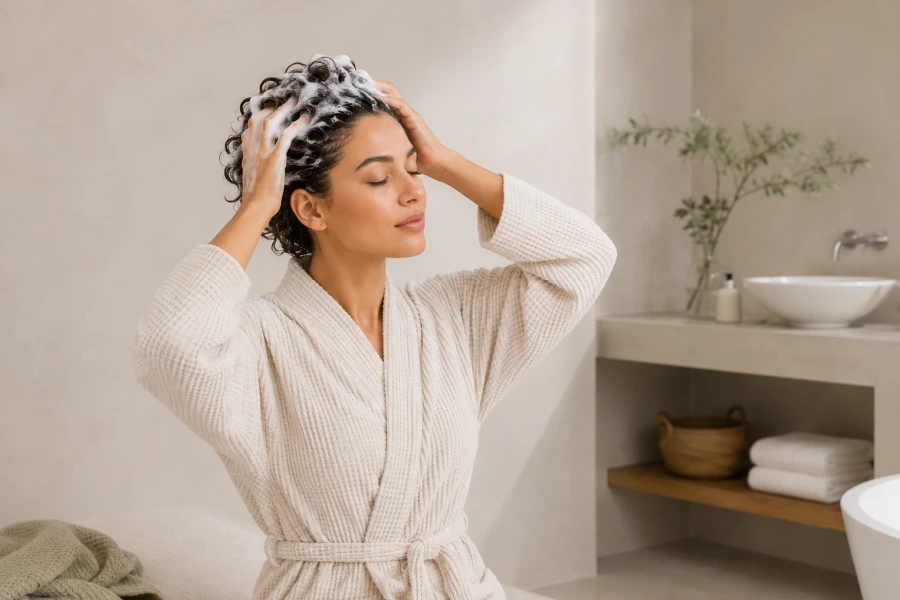
Beauty marketing often suggests that hair concerns require an endless list of products. Scalp health for hair growth offers a more grounded place to start. It focuses on the everyday conditions that help your scalp feel clean, comfortable, and cared for. This approach does not promise instant change. Instead, it encourages a routine you can understand and repeat. Your wash day, styling habits, and product buildup all matter. So does how your scalp feels between washes. Simple observation can be more useful than adding another bottle. A thoughtful foundation helps you make clearer choices. That clarity can make hair care feel less overwhelming and more personal.
A healthy-looking hair routine starts with a scalp that feels comfortable. That might mean less tightness after washing. It may mean fewer moments when your roots feel weighed down. Everyone’s baseline looks different. The most useful thing is learning your own pattern. Notice how your scalp feels after exercise. Pay attention to changes after new styling products. Keep your routine calm while you are observing. This gives you a clearer picture of what helps. Comfort is not a minor detail. It is a valuable part of long-term hair care.
Product buildup can sit close to the roots and change how your scalp feels. This does not mean you need harsh cleansing every day. It means your routine may need a thoughtful reset occasionally. Start by rinsing carefully during regular washes. Take your time around the crown and hairline. Use your fingertips to work product through the roots. Try scalp exfoliation habits with a protective hair routine when you want a more structured approach to buildup. Keep the process gentle. A refreshed scalp should feel clean, not stripped.
Over-cleansing can sometimes leave your scalp feeling uncomfortable. That discomfort may lead to more product experimentation than you need. Start with a shampoo that feels manageable for your usual schedule. Focus on technique before assuming you need something stronger. Massage slowly with your fingertips. Rinse longer than you think is necessary. Use conditioner mainly on the lengths when that suits your hair. These basics can help create a more balanced wash experience. A gentler process is often easier to repeat. Repetition is what helps you understand your results.
Hair styling can affect how your scalp feels during the day. Tight styles may create pressure around the hairline. Heavy extensions or accessories can change where that pressure sits. You do not need to eliminate every polished look. Instead, create more variety. Choose lower-tension styles on days when your scalp feels sensitive. Let your hair down when possible. Rotate your part occasionally. These changes give your scalp a little more room. Comfort should be part of your style decision. A good look feels better when it also feels easy to wear.
Consistency does not mean doing more. It means creating a few habits you can maintain. Cleanse when your scalp needs it. Keep tools clean. Avoid pulling at roots when detangling. Give yourself simple checks before adding new products. Try a scalp cleansing routine with scalp buildup removal when you want your routine to feel more organized. Each habit supports the next. Together, they can make hair care feel more predictable. That predictability is useful when you are trying to understand what works.
Brushes, combs, clips, and towels all come into contact with your hair regularly. Keeping them clean is a simple form of maintenance. Remove loose strands from brushes. Wash styling tools when residue becomes visible. Use a fresh towel instead of one that holds product from previous washes. These small details can support a cleaner feeling between wash days. They also make your routine feel more intentional. Hair care is not only about formulas. It is also about the objects you use every day. Clean tools make the whole ritual feel fresher.
Wash day does not need to feel like a race. Build in a few extra minutes when you can. Let your scalp receive your full attention. Rinse carefully. Dry with a gentler touch. Choose a style that does not create immediate tension. Try scalp moisture balance with soothing scalp care when you want the whole process to feel more calming. This kind of routine can turn a chore into a reset. Slower care often helps you make better observations. Better observations lead to more useful choices.
Hair care becomes more enjoyable when you stop trying to force immediate outcomes. Your job is to create supportive conditions. That includes a comfortable wash rhythm and gentler styling. It includes paying attention to how products feel over time. It also means giving routines enough time before changing everything. Patience can be difficult in a category full of fast promises. Still, it is often the most practical approach. A clear, calm routine gives you more useful information. It lets you make changes with intention. That is a far stronger strategy than constantly starting over.
Long-term care rarely looks dramatic from one day to the next. It looks like thoughtful choices repeated over time. You clean your scalp with attention. You protect it from unnecessary tension. You notice when something feels different. Then you adjust without panic. This approach leaves room for real life. Some weeks will be easier than others. The routine remains valuable because it can flex. Start with what feels manageable. A healthier relationship with your scalp can make your entire hair routine feel more grounded, more comfortable, and more sustainable.



Leave a comment